Humanités numériques, histoire littéraire et analyse de grands corpus textuels
Structure de l'intervention
- Humanités numériques et analyse de grands corpus textuels
- Quelques définitions
- Les humanités numériques et l'analyse de grands corpus textuels
- La mise en scène médiatique de l'Académie canadienne-française au prisme de l'analyse textuelle automatisée
- Mise en scène médiatique et survie organisationnelle : L’exemple de la médiatisation de l’Académie canadienne-française
- Le Répertoire des périodiques du Québec
Humanités numériques et analyse de grands corpus textuels
Les définitions des HN, un genre en soi (1)
What is (or are) the “digital humanities,” aka “humanities computing”? It’s tempting to say that whoever asks the question has not gone looking very hard for an answer. “What is digital humanities?” essays like this one are already genre pieces.
Matthew G. Kirschenbaum, « What Is Digital Humanities and What’s It Doing in English Departments? », dans ADE Bulletin, no 150 (2010), p. 55.Les définitions des HN, un genre en soi (2)
 Melissa Terras, Julianne Nyhan & Edward VanHoutte (dir.), Defining Digital Humanities. A Reader, Surrey, Ashgate, 2013.
Quelques définitions des HN
Dominique Vinck (2016)
Les humanités numériques, c'est une affaire de lettreux qui jouent aux geeks.
Dominique Vinck, Humanités Numériques. La culture face aux nouvelles technologies, Le Cavalier Bleu éditions, 2016, p. 47.Elena Pierazzo (2011)
Digital Humanities is the discipline born from the intersection between humanities scholarship and computational technologies. It aims at investigating how digital methodologies can be used to enhance research in disciplines such as History, Literature, Languages, Art History, Music, Cultural Studies and many others. Digital Humanities holds a very strong practical component as it includes the concrete creation of digital resources for the study of specific disciplines.
Elena Pierazzo, « Digital humanities: a definition ». En ligne : http://epierazzo.blogspot.co.uk/2011/01/digital‐humanities‐definition.htmlJohn Unsworth (2002)
[O]ne of the many things you can do with computers is something that I would call humanities computing, in which the computer is used as a tool for modeling humanities data and our understanding of it, and that activity is entirely distinct from using the computer when it models the typewriter, or the telephone, or the phonograph, or any of the many other things it can be.
John Unsworth, « What is Humanities Computing and What is Not? », dans Jahrbuch für Computerphilologie, no 4 (2002), p. 71.Milad Douehei (2011)
Digital Humanities est le terme courant qualifiant les efforts multiples et divers de l'adaptation à la culture numérique du monde savant.
Milad Douehei, Pour un humanisme numérique, Seuil, 2011, p. 22.Matthew G. Kirschenbaum (2015)
If digital humanities is to concern itself with the full sweep of our collective past then it must, like a Klein bottle, also come to terms with the born-digital objects and artifacts that characterize cultural production in all areas of human endeavour in the decades since the advent of general-purpose computers.
Matthew G. Kirschenbaum, « Ancient evenings : Retrocomputing in the Digital Humanities », dans Susan Schreibman et al. (dir.), A New Companion to Digital Humanities, Wiley-Blackwell, 2e édition, 2016, p. 188.Stephen Ramsay (2011) (1)
Nowadays, the term can mean anything from media studies to electronic art, from data mining to edutech, from scholarly editing to anarchic blogging, while inviting code junkies, digital artists, standards wonks, transhumanists, game theorists, free culture advocates, archivists, librarians, and edupunks under its capacious canvas.
Stephen Ramsay, « Who's in and Who's Out », dans Melissa Terras, Julianne Nyhan & Edward VanHoutte (dir.), Defining Digital Humanities. A Reader, Surrey, Ashgate, 2013, p. 239-243.Stephen Ramsay (2011) (2)
Do you have to know how to code [to be a digital humanist]? I’m a tenured professor of digital humanities and I say “yes”. [...] Personally, I think Digital Humanities is about building things. I’m willing to entertain highly expansive definitions of what it means to build something […] but if you are not making anything, you are not […] a digital humanist. You might be something else that is good and worthy – maybe you’re a scholar of new media, or maybe a game theorist, or maybe a classicist with a blog (the latter being a very good thing indeed) – but if you aren’t building, you are not engaged in the “methodologization” of the humanities, which, to me, is the hallmark of the discipline that was already decades old when I came to it.
Stephen Ramsay, « Who's in and Who's Out ». 8 janvier 2011. http://stephenramsay.us/ text/2011/01/08/whos-in-and-whos-out.html.Digital Humanities Manifesto 2.0 (2009)
Process is the new god; not product . Anything that stands in the way of the perpetual mash-up and remix stands in the way of the digital revolution. Digital Humanities means iterative scholarship, mobilized collaborations, and networks of research. It honors the quality of results; but it also honors the steps by means of which results are obtained as a form of publication of comparable value. Untapped gold mines of knowledge are to be found in the realm of process.
Les humanités numériques et l'analyse de grands corpus textuels
Bibliothèque de l'OBVIL
HyperRoy
Exploitation des données textuelles - Voyant Tools
Exploitation des données textuelles - Text clustering : Docuscope

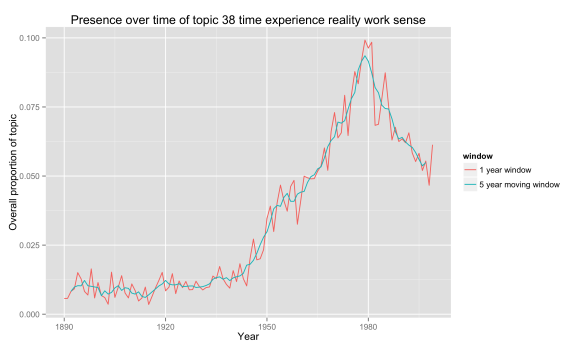
Exploitation des données textuelles - Topic modeling
Exploitation des données textuelles - Analyse de ponctuation - Adam J. Calhoun (1)

Exploitation des données textuelles - Analyse de ponctuation - Adam J. Calhoun (2)


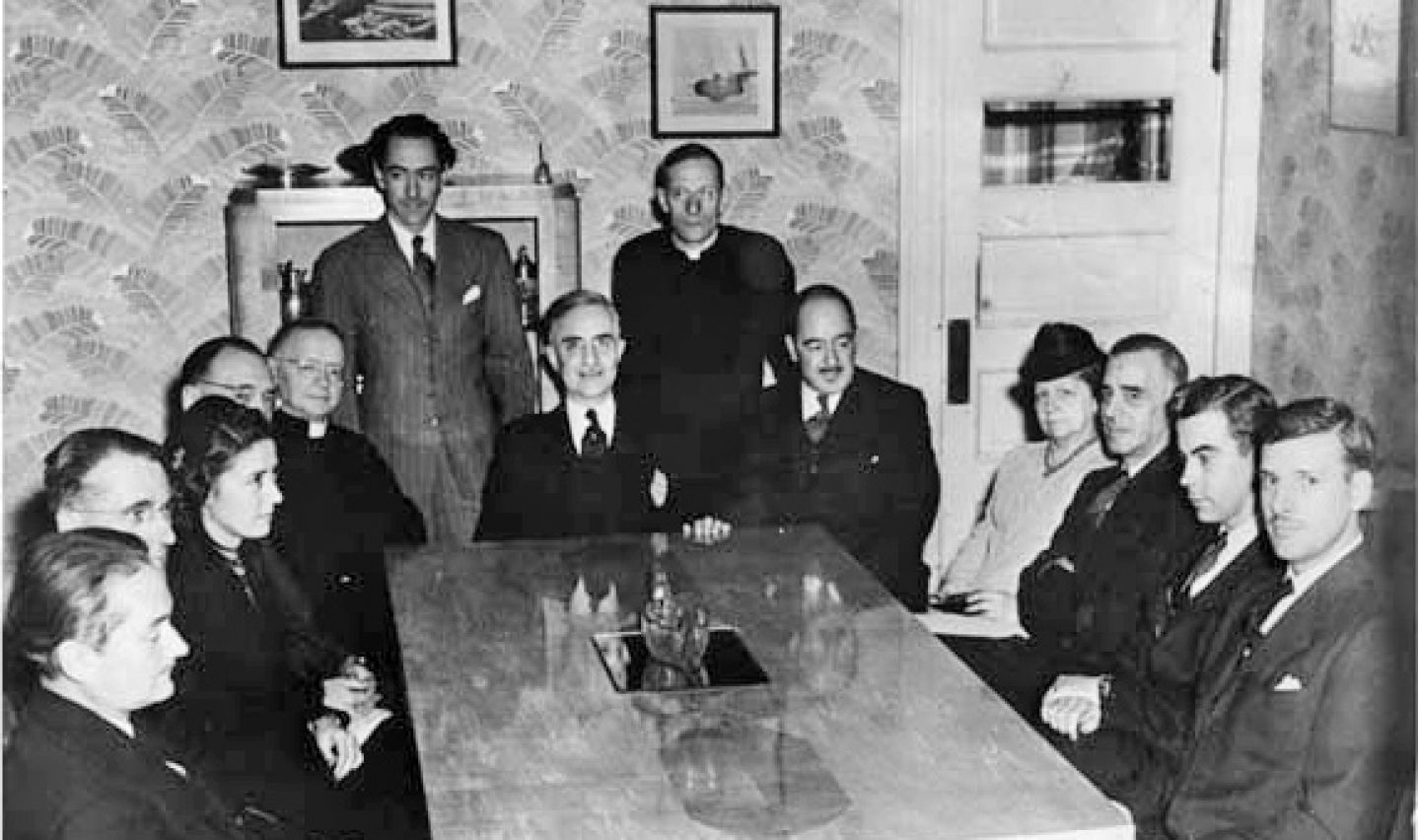
Mise en scène médiatique et survie organisationnelle : L’exemple de la médiatisation de l’Académie canadienne-française
BAnQ numérique : Forces et faiblesses
Le Répertoire des périodiques du Québec
Contenu de la plateforme RPQ
- 220 périodiques québécois (1870 – 2016) : grands quotidiens, hebdomadaires régionaux, revues culturelles, scientifiques et politiques, magazines, etc.
- 278 000 livraisons
- 4,5 To de documents au format PDF
- 60 Go de données textuelles
- Accessible via une application web et une API REST
Composantes de la plateforme RPQ

L'outil de recherche plein-texte
Résultats - Librairie d'analyse textuelle automatisée
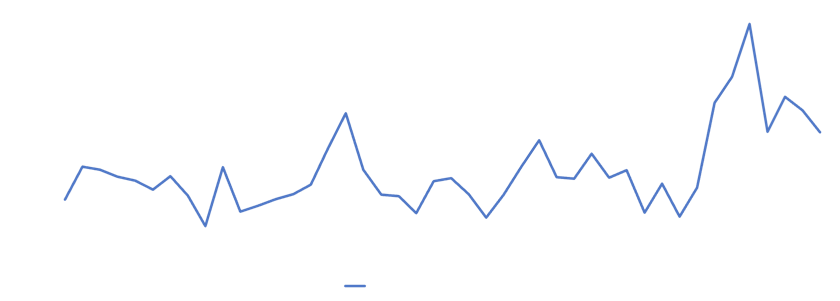
Évolution de la fréquence d’apparition de « Académie canadienne-française »
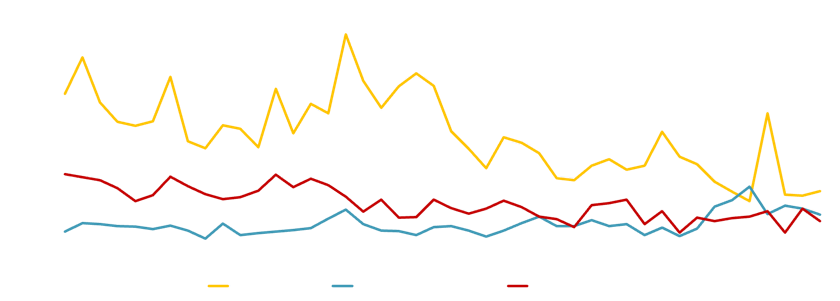
Fréquence d’apparition des noms de trois regroupements académiques
Liste des termes les plus cooccurents

Utilisations du label « membre de l’A.C.F. »

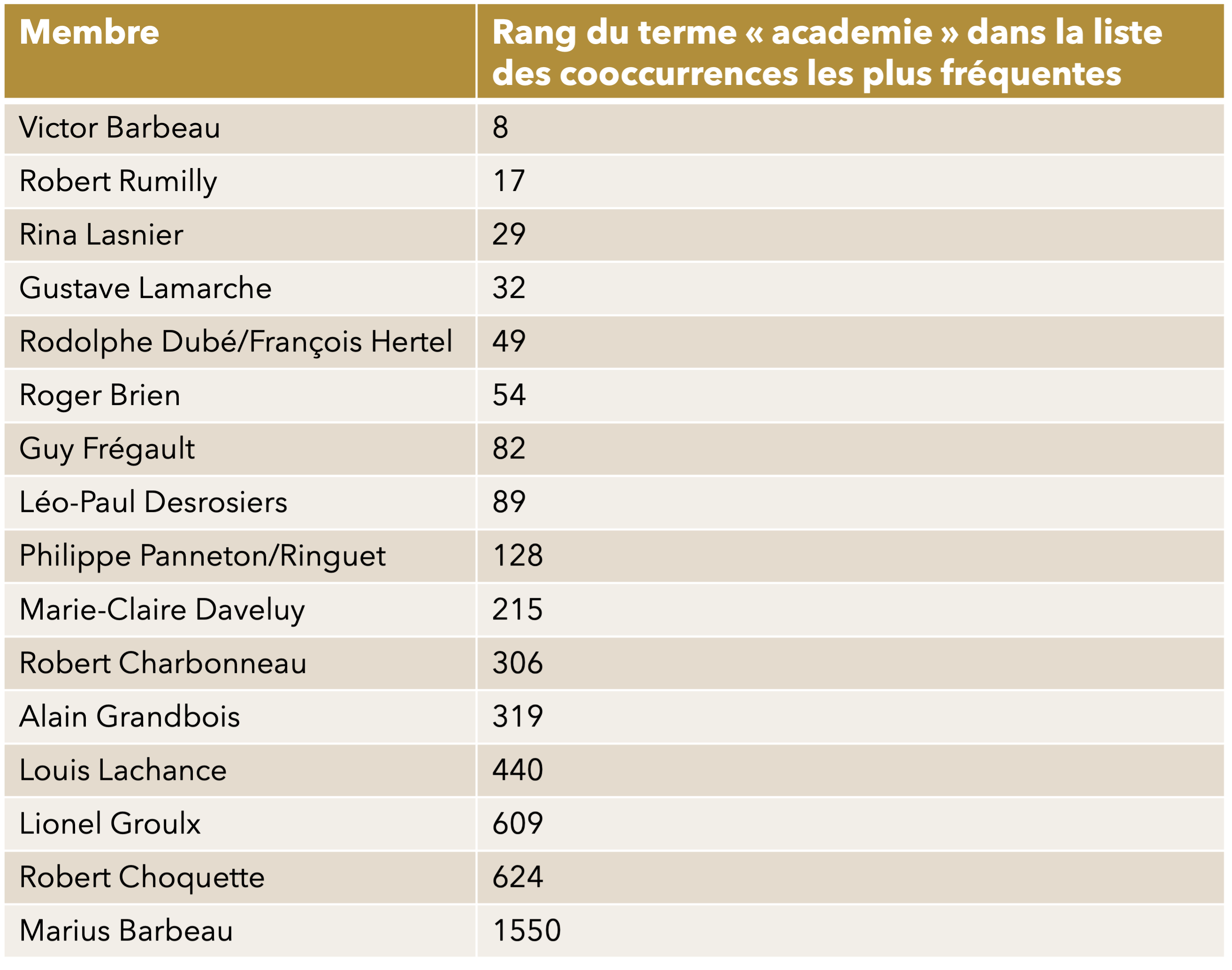
Fréquence de la cooccurrence du terme« academie » et des noms des membres fondateurs (1950-1959)
Conclusion
Humanités numériques = Co-création
Digital Humanities=Co‐creation. Because of the complexity of Big Humanities projects,teamwork, specialized roles within teams,and “production” standards that imply specialization become defining features of the digital turn in the human sciences. Large scale,distributed models of scholarship represent one of the transformative features of the Digital Humanities.
Drucker, Johanna, Peter Lunenfeld, Todd Presner, Jeffrey Schnapp et al., « The Digital Humanities Manifesto 2.0 », 22 juin 2009.Le projet d’infrastructure LIRAHC
- Développement : janvier 2024 à décembre 2026
- Équipe : Jean-Marc Larrue (UdeM), Chantal Savoie (UQAM), Sandria P. Bouliane (Laval), Susan Brown (Guelph), Christopher Collins (UOIT), Hervé Guay (UQTR),Lucie Hotte (Ottawa), Vincent Larivière (UdeM), Patrick Leroux (Concordia), Nathalie Watteyne (UdeS) + 20 utilisateurs.trices principaux.les.
- Composantes
- Plateforme numérique
- Laboratoires de développement
- Laboratoires de recherche et d’analyse
Annexe
L'Académie française comme référence et caution - 1 de 2
L’Académie canadienne-française, dont plusieurs écrivains désiraient depuis quelques années l’institution a été récemment fondée à Montréal. Cette institution est une réplique, quoique sur une base plus modeste, de la célèbre Académie Française qui depuis plus de 300 ans est un des critères du bon goût littéraire en France..
Académie française comme référence et caution - 2 de 2
Verrons-nous des écrivains, tel l’auteur de la Henriade, se moquer, d’un sourire voltairien, des vingt-quatre académiciens, mais dès qu’ils ne sont plus que vingt-trois, se radoucir afin de prendre un moelleux fauteuil parmi eux? Y en aura-t-il d’aussi constants et d’aussi sages que Louis Racine pour présenter et retirer tour à tour leur candidature jusque sur leur lit de mort? Entendrons-nous des chansons sur la lenteur académicienne, des rimes, des boutades à la Piron qui, quoi qu’il en ait écrit, fut un soir académicien? Apprendrons-nous que tel auteur, à l’instar de Molière, préféra la comédie à l’Académie? L’Académie aura-t-elle sa vie secrète, ses "prudents" et ses "agréables à la Cour?"
Les critiques : Les deux Académies
Comme ses parrains de France, elle aura, elle aussi, son Institut. Mais… il y a un mais. Que faire pour « dénicher » les mécènes? Lancer un appel, un S.O.S. à la Gestapo…C’est une idée… de poids. Audaces fortuna juvat.
Données et sources de données
- plus de 4 millions de documents textuels (œuvres littéraires, livraisons de périodiques, scripts radiophoniques, articles savants, etc.) au format PDF ou texte;
- des dizaines de milliers de documents visuels;
- des milliers d’enregistrements audio et vidéo;
- une masse considérable de données et de métadonnées concernant :
- les productions culturelles;
- les lieux et espaces de création et de diffusion de la culture;
- les événements culturels ou en lien avec les pratiques culturelles;
- les individus et organismes engagés dans la production et la diffusion de la culture, leurs réseaux, leurs parcours.
La plateforme numérique LIRAHC - 1 de 2
- un système de gestion de base de données (SGBD);
- une interface de programmation applicative (API) REST;
- un triplestore pour l’exposition de nos données sur le web de données ouvertes et liées;
- un cadriciel d’interface (framework) offrant de multiples composantes prêtes à l’usage et créées spécifiquement pour interagir avec l’API;
- un cadriciel de développement d’applications Python : intégration de jeux de données et analyse automatisée des données de la plateforme;
- une application web sécurisée de gestion de données qui permettra d’ajouter à la plateforme de nouveaux jeux de données et de modifier les données existantes;
- une application web de consultation, de recherche et d’analyse des données intégrant divers modules d’analyse et de visualisation de données (annotation de documents multimédias et textuels, géolocalisation, analyse textuelle automatisée, analyse des trajectoires, analyse des réseaux sociaux, etc.)
La plateforme numérique LIRAHC - 2 de 2
