Séance 14 - Politique et culture numérique : II – Enjeux éthiques de la culture numérique
Introduction
Structure de la présentation
- Vie privée et surveillance
- Algorithmes et prises de décision
- Digital Labor
Vie privée et surveillance
Vie privée et surveillance - 1
Much is made of the enabling character of the Internet. We are told that this amazing tool liberates us to do things hitherto undreamed of. The idea of a 'World Wide Web' suggests a global network of interconnected electronic nodes that make possible a new level of communication, that goes beyond the older broadcasting mode, into a sphere of interchange that promises to better even the democratic structure of the telephone system. […] Webs can have other purposes, of course. The spider spins the web in order to entangle and entrap the unsuspecting fly. The more the fly struggles, the more it is stuck. Without disputing whatever inherently democratizing possibilities lie latent in the Internet, it is worth exploring the capacity of the 'Web' to capture and control, to target and to trap, to manage and to manipulate. Although much has changed since the birth of the Internet's precursor as a Cold War military communications system, power has not simply been discarded as an infantile trait. Rather, power is now bound up with an extensive, increasingly integrated, surveillance technology.
Vie privée et surveillance - 2 - Le Panoptique
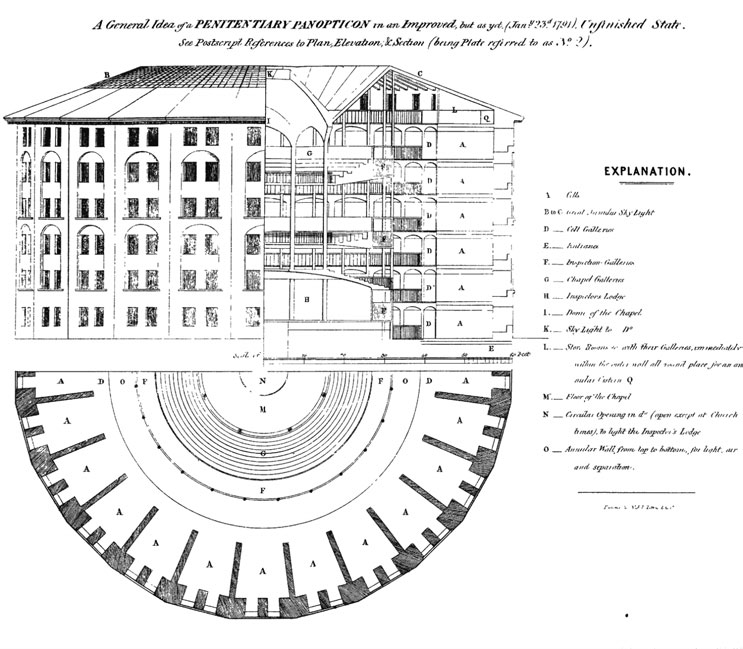
Vie privée et surveillance - 3

The Aware Home, like many other visionary projects, imagined a digital future that empowers individuals to lead more-effective lives. What is most critical is that in the year 2000 this vision naturally assumed an unwavering commitment to the privacy of individual experience. Should an individual choose to render her experience digitally, then she would exercise exclusive rights to the knowledge garnered from such data, as well as exclusive rights to decide how such knowledge might be put to use.Today these rights to privacy, knowledge, and application have been usurped by a bold market venture powered by unilateral claims to others’ experience and the knowledge that flows from it [...], [a] voracious and utterly novel commercial project that I call surveillance capitalism.
Vie privée et surveillance - 4
Consider that the internet has become essential for social participation, that the internet is now saturated with commerce, and that commerce is now subordinated to surveillance capitalism. Our dependency is at the heart of the commercial surveillance project, in which our felt needs for effective life vie against the inclination to resist its bold incursions. This conflict produces a psychic numbing that inures us to the realities of being tracked, parsed, mined, and modified. It disposes us to rationalize the situation in resigned cynicism, create excuses that operate like defense mechanisms (“I have nothing to hide”), or find other ways to stick our heads in the sand, choosing ignorance out of frustration and helplessness. In this way, surveillance capitalism imposes a fundamentally illegitimate choice that twenty-first-century individuals should not have to make, and its normalization leaves us singing in our chains.
Algorithmes et prises de décision
Algorithmes et prises de décision - 1
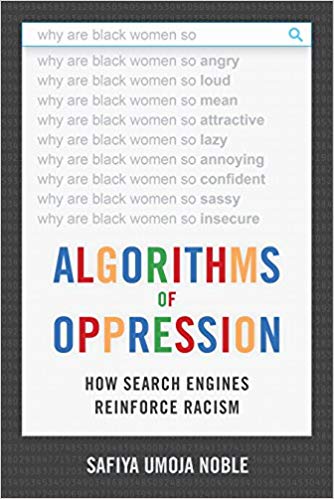
In his famous novel 1984, George Orwell got one thing wrong. Big Brother is not watching you, he's watching us. Most people are targeted for digital scrutiny as members of social groups, not as individuals. People of color, migrants, unpopular religious groups, sexual minorities, the poor, and other oppressed and exploited populations bear a much higher burden of monitoring and tracking than advantaged groups. Marginalized groups face higher levels of data collection when they access public benefits, walk through highly policed neighborhoods, enter the health-care systems, or cross national borders.
Algorithmes et prises de décision - 2
Digital Labor
Digital Labor

Digital Labor

Digital Labor - 3 - Les trois types
- Les services à la demande
- Le microtravail
- Le travail numérique gratuit
Digital Labor - 4

Digital Labor - 5
Content moderation of online social and information spaces is not new; people have been creating and enforcing rules of engagement in online social spaces since the inception of those spaces and throughout the past four decades. What is new, however, is the industrial-scale organized content moderation activities of professionals who are paid for their evaluative gatekeeping services, and who undertake the work they do on behalf of large-scale commercial entities: social media firms, news outlets, companies that have an online presence they would like to have managed, apps and dating tools, and so on. It is a phenomenon that has grown up at scale alongside the proliferation of social media, digital information seeking, and online connected social and other activity as a part of everyday life. As a result of the incredible global scale, reach, and impact of mainstream social media platforms, these companies demand a workforce dispersed around the world, responding to their need for monitoring and brand protection around the clock, every single day.
Digital Labor - 6
We call this excessive activity that makes the Internet a thriving and hyper-active medium “free labour”—a feature of the cultural economy at large, and an important, yet unacknowledged, source of value in advanced capitalist societies…. Far from being an “unreal”, empty space, the Internet is animated by cultural and technical labour through and through, a continuous production of value which is completely immanent in the flows of the network society at large.
Digital Labor - 7
In effect, the creativity of modders significantly reduces game developers' R&D and marketing costs. Postigo puts it succinctly when he says that 'this process manages to harness a skilled labour force for little or no initial cost and represents an emerging form of labour exploitation on the Internet'. The importance of this "free" source of innovation can be hardly overestimated.
Digital Labor - 8
Fans' profuse contributions to the Internet can be regarded otherwise: as labor. Online fan productions constitute unauthorized marketing for a wide variety of commodities almost every kind of product has attracted a fandom of some kind. [F]an activity, instead of being dismissed as insignificant and a waste of time at best and pathological at worst, should be valued as a new form of publicity and advertising, authored by volunteers, that corporations badly need in an era of market fragmentation. In other words, fan production is a category of work.
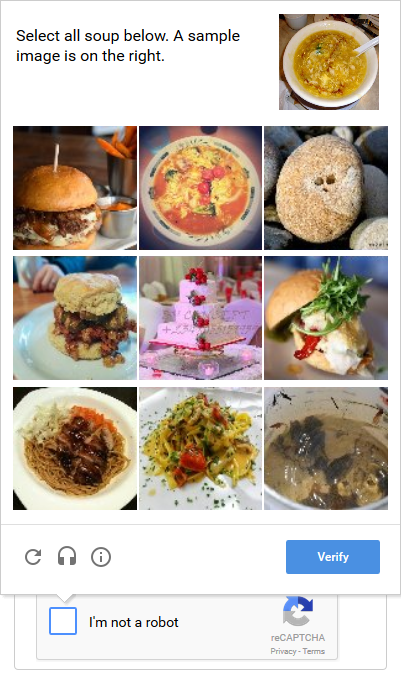
Digital Labor - 9 - reCAPTCHA