Séance 10 - Réalité, vérité et expérience : La philosophie face aux productions culturelles numériques
Introduction
Introduction - Approches dystopiques de la révolution numérique - 1
[L]a philosophie de la technique au XXe siècle [s'est] enfermé[e] dans l'angoisse éthique, centrée sur l'analyse tourmentée de l'imprévisibilité du progrès technique, condamné à l'irresponsabilité d'un processus sans sujet.
Introduction - Approches dystopiques de la révolution numérique - 2
Nous demeurons partout enchaînés à la technique et privés de liberté, que nous l'affirmions avec passion ou que nous la niions pareillement. Quand cependant nous considérons la technique comme quelque chose de neutre, c'est alors que nous lui sommes livrés de la pire façon: car cette conception, qui jouit aujourd'hui d'une faveur toute particulière, nous rend complètement aveugles en face de l'essence de la technique.
Introduction - Approches dystopiques de la révolution numérique - 3
The Boolean Logic of the computer marks a new "psychic framework" that cuts off the peripheral vision of the mind's eye.
Introduction - Approches dystopiques de la culture numérique - 4
[C]learly technological information is the most prominent layer of the contemporary cultural landscape, and increasingly it is more of a flood than a layer, a deluge that threatens to erode, suspend and dissolve its predecessors.
Introduction - Approches dystopiques de la culture numérique - 5
One reason to be wary of utopian or dystopian [...] theories is that they encourage a tendency toward blanket denunciation and renunciation of the internet, or the blanket opposite, when what is needed is a piecemeal evaluation of this or that use of it, this or that tool that is enabled by the internet metatool.
Structure de la présentation
- Réalité : Ontologie et culture numérique
- Vérité : Épistémologie(s) du numérique
- Expérience : Phénoménologie et culture numérique
Réalité : Ontologie et culture numérique
Ontologie de la culture numérique - 1
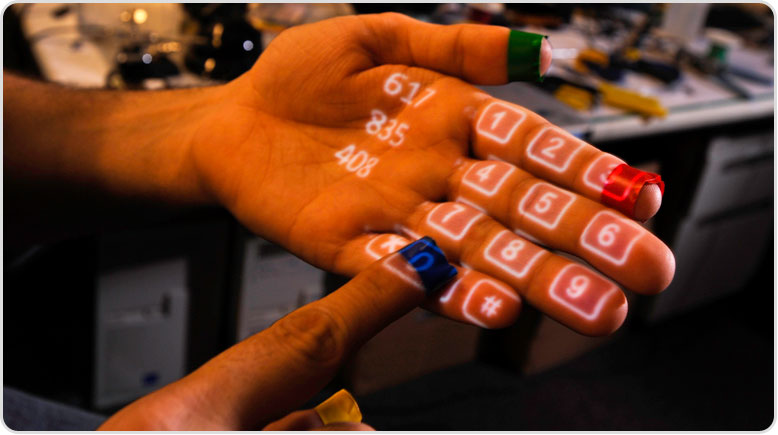
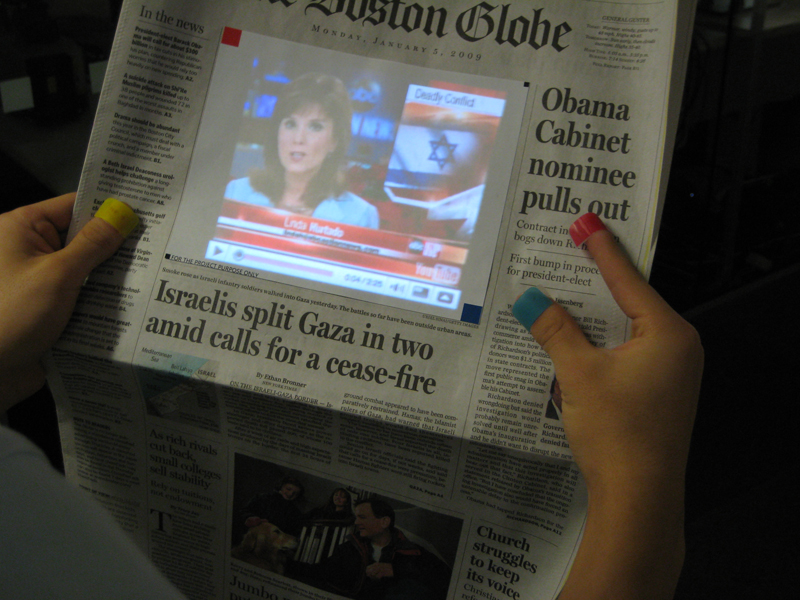
Si le brouillage des frontières ontologiques est devenu un caractère constitutif du numérique, il n’en soulève pas moins de nombreuses questions : peut-on véritablement déclarer que les notions de représentation, de réel, ou de virtuel sont définitivement périmées ? Ou faudrait-il, au contraire, réaffirmer leur intérêt et leur pertinence, du moins d’un point de vue heuristique ? Peut-on parler d’une problématique « ontologique » dans la culture numérique ou s'agit-il d’une querelle de mots ?
Ontologie de la culture numérique - 2 : La réalité augmentée

Ontologie de la culture numérique - 3 : La réalitée augmentée
Ontologie de la culture numérique - 4 : La réalité virtuelle
It is possible to recapitulate a large portion of the history of Western metaphysics from the vantage-point offered by virtual reality. The debates over rationalism, empiricism, realism, idealism, materialism, nominalism, phenomenology, possible worlds, supervenience, space, and time, to name just a few, can all find new purchase, as well as some new twists, in this brave new world of computer-generated virtual reality.
Ontologie de la culture numérique - 5 : La réalité virtuelle
Broadly, virtual reality (VR) is the label given to a range of computer-based approaches to the visualisation of concepts, objects or spaces in three or more dimensions.
Ontologie de la culture numérique - 6 : La réalité virtuelle
[Ils] font se chevaucher leur monde avec la réalité de façon particulière : en combinant l'association de représentations référentielles et de représentations référentielles avec l'interactivité.
Ontologie numérique du réel : la Digital Ontology - 1
The overall perspective, emerging from digital ontology, is one of a metaphysical monism: ultimately, the physical universe is a gigantic digital computer. It is fundamentally composed of digits, instead of matter or energy, with material objects as a complex secondary manifestation, while dynamic processes are some kind of computational states transitions. There are no digitally irreducible infinities, infinitesimals, continuities, or locally determined random variables. In short, the ultimate nature of reality is not smooth and random but grainy and deterministic.
Ontologie numérique du réel : la Digital Ontology - 2
It's possible, but I can't see any motivation for these speculations, except that this is the sort of system that [they] have becomed used to in their work on computers. So might a carpenter, looking at the moon, suppose that it is made of wood.
Ontologie numérique du réel : la Digital Ontology - 3
Vérité : Épistémologie(s) du numérique
Connaissance et numérique - 1
Dans une telle perspective, les projets en hn en appellent à plusieurs modèles qui, dans leur application, s’influencent les uns les autres. Et, souvent, leur utilisation est itérative. Les modèles formels, matériels et conceptuels s’influencent mutuellement et imposeront des révisions. Les hn doivent appliquer des principes de génie logiciel où les constantes reprises, itérations, ajustements des modèles sont inhérents à la démarche. Pas plus que les projets typiquement informatiques, les projets HN ne se terminent au premier tour de piste. Et, dans cette démarche, l’ordinateur n’est pas une solution miracle. Il n’est qu’un outil dans la dynamique interprétative qu’est la pratique cognitive scientifique.
Connaissance et numérique - 2
Epistemologically, a single-right-answer is believed to underlie each phenomenon, even though experts may not yet have developed a full understanding of the systemic causes that provide an accurate interpretation of some situations. In contrast, the Web 2.0 definition of “knowledge” is collective agreement about a description that may combine facts with other dimensions of human experience, such as opinions, values, and spiritual beliefs.
La question du vrai et du faux en contexte numérique
the high level of critical discussion on the internet may create an atmosphere that is not conducive to the construction of theories that are stated explicitly enough to function as the core of either a progressive or a degenerative research programme. If this is right then the internet can delay the development of conspiracy theories by delaying the development of the research programmes that they are embedded in.
Expérience : Phénoménologie et culture numérique
Phénoménologie du réel augmenté : Typologie de Ihde
- Relations incarnées
- Relations herméneutiques
- Relations d'altérité
- Relations d'arrière-plan
Phénoménologie de la culture numérique - 1

Phénoménologie de la culture numérique - 2
The virtual worlds of videogames are formed as much from simulations of physical forces as from simulated space. Virtual physics such as friction, collision, gravity and acceleration are experienced by players not only visually, as would the movement and action viewed on a cinema or TV screen, but are also felt. Somewhere between the on-screen action, the algorithmic and interactive operations of the game software, and the visual and tactile feedback between the game hardware and software and players, virtual forces have actual effects.