Histoire et pratique des humanités numériques en études littéraires
Plan sommaire de la conférence
- Définition(s), histoire et enjeux
- Objets, méthodes et outils : études littéraires et humanités numériques
Section 1 : Définition(s), histoire et enjeux des humanités numériques
Les définitions des HN, un genre en soi (1)
What is (or are) the “digital humanities,” aka “humanities computing”? It’s tempting to say that whoever asks the question has not gone looking very hard for an answer. “What is digital humanities?” essays like this one are already genre pieces.
Matthew G. Kirschenbaum, « What Is Digital Humanities and What’s It Doing in English Departments? », dans ADE Bulletin, no 150 (2010), p. 55.Les définitions des HN, un genre en soi (2)
 Melissa Terras, Julianne Nyhan & Edward VanHoutte (dir.), Defining Digital Humanities. A Reader, Surrey, Ashgate, 2013.
Quelques définitions des HN
Dominique Vinck (2016)
Les humanités numériques, c'est une affaire de lettreux qui jouent aux geeks.
Dominique Vinck, Humanités Numériques. La culture face aux nouvelles technologies, Le Cavalier Bleu éditions, 2016, p. 47.Elena Pierazzo (2011)
Digital Humanities is the discipline born from the intersection between humanities scholarship and computational technologies. It aims at investigating how digital methodologies can be used to enhance research in disciplines such as History, Literature, Languages, Art History, Music, Cultural Studies and many others. Digital Humanities holds a very strong practical component as it includes the concrete creation of digital resources for the study of specific disciplines.
Elena Pierazzo, « Digital humanities: a definition ». En ligne : http://epierazzo.blogspot.co.uk/2011/01/digital‐humanities‐definition.htmlMilad Douehei (2011)
Digital Humanities est le terme courant qualifiant les efforts multiples et divers de l'adaptation à la culture numérique du monde savant.
Milad Douehei, Pour un humanisme savant, Seuil, 2011, p. 22.Matthew G. Kirschenbaum (2015)
If digital humanities is to concern itself with the full sweep of our collective past then it must, like a Klein bottle, also come to terms with the born-digital objects and artifacts that characterize cultural production in all areas of human endeavour in the decades since the advent of general-purpose computers.
Matthew G. Kirschenbaum, « Ancient evenings : Retrocomputing in the Digital Humanities », dans Susan Schreibman et al. (dir.), A New Companion to Digital Humanities, Wiley-Blackwell, 2e édition, 2016, p. 188.L'histoire des HN
- Les origines : 1949-1969
- La constitution des premiers grands corpus : 1970-1983
- L'ordinateur personnel et la création de la TEI : 1984-1992
- Le développement du web : 1993-2003
- Les HN aujourd'hui : 2004-
Les origines : 1949-1969


1949 - Roberto Busa débute la mise en place du Corpus Thomisticum

1964 - Création du Centre for Literary and Linguistic Computing
Les authorship studies
- Un des premiers types d'analyse textuelle automatisée
- Un exemple : Andrew Morton et son travail sur les épîtres pauliniennes (1963)

Septembre 1966 - Parution du premier numéro de Computers and the Humanities
Les humanities computing en France : l'École des Annales
- Plusieurs travaux de recherche menés au milieu des années soixante à l'aide de l'informatique.
- Un exemple : Les Paysans du Languedoc d'Emmanuel Le Roy Ladurie.
Fin des années 60 - Création du logiciel et du format de fichier textuel COCOA
- 4000 cartes perforées
- Permet la création d'index et le comptage de mots
- L'usager peut spécifier la structure du document ciblé et faire se chevaucher plusieurs structures textuelles (texte + métadonnées)
La constitution des premiers grands corpus : 1970-1983

1972 - Création du Thesaurus Linguae Graecae
1976 - Création de la Oxford Text Archive (OTA)
- Premier dépôt d'éditions électroniques de textes pour la recherche
- Fondateur : Lou Burnard
En France, création de Frantext
- Encodage de 1000 textes français
- Pour servir d'exemples pour Le Trésor de la langue française
Création des premières associations, des premiers événements HN
- En Grande-Bretagne : tenue, à partir de 1970, de conférences annuelles qui découleront sur la mise en place de l'Association for Literary and Linguistic computing (1973)
- Aux États-Unis : mise en place des International Conferences on Computing in the Humanities qui inspireront la création, en 1978, de l'Association for Computers and the Humanities
1982 - Le Oxford Concordance Program (OCP) supplante COCOA
L'ordinateur personnel, HyperCard, le courriel et la création de la TEI : 1984-1992

1987, 1990 - Hypercard et Hypercard 2.0

1991 - Beowulf Workstation
Adoption massive de la technologie du courriel
- La majorité des universités donnent accès à ce service à partir du milieu des années quatre-vingt
- Facilite fortement les échanges entre les chercheurs en HN et, de fait, la diffusion des innovations technologiques
Des publications importantes
- 1986 - Début de la parution de Literary and Linguistic Computing
- 1988 et 1989, les Humanities Computing Yearbook
Novembre 1987 - Création de la TEI
- Mise en place d'une norme d'encodage des textes
- Mai 1994 - Première version (P1) des Guidelines for Electronic Text Encoding and Interchange
Le développement du web : 1993-2003

1993 - Le navigateur Mosaic et le World Wide Web
Multiplication des projets d'édition numérique et mise en ligne des corpus
- 1996 - William Blake Archive
- 1997 - The Orlando Project
- 1998 - Frantext
- 2001 - Thesaurus Linguae Graecae
Fin des années 90 - Premiers cursus en humanités numériques
- Diplômes en humanities computing - King's College
- M.A. en Digital Humanities - Université de Virginie (2001)
2002 - La création de l'Alliance of Digital humanities organization (ADHO)
- Regroupe de nombreuses associations HN
- Interprété par plusieurs comme un signe de maturité du champ
Les HN aujourd'hui : 2004-
Les Companions (1)
2004 - A Companion to Digital Humanities
Des Humanities computing aux Digital humanities
The real origin of that term [digital humanities] was in conversation with Andrew McNeillie, the original acquiring editor for the Blackwell Companion to Digital Humanities.[...] Ray [Siemens] wanted “A Companion to Humanities Computing” as that was the term commonly used at that point; the editorial and marketing folks at Blackwell wanted “Companion to Digitized Humanities.” I suggested “Companion to Digital Humanities” to shift the emphasis away from simple digitization.
Matthew Kirschenbaum, « What Is Digital Humanities and What’s It Doing in English Departments? », dans Debates in the Digital humanities, 2012. En ligne. http://dhdebates.gc.cuny.edu/debates/text/38Les Companions (2)

2008 - A Companion to Digital Literary Studies
Élargissement du champ


Un exemple : Les Platform studies
Les Companions (3)
2016 - A New companion to Digital Humanities
Nouvelles collections, nouvelles revues
- Collection « Digital research in the arts and humanities », chez Ashgate
- Collection « Topics in the Digital Humanities », chez Illinois Press
- Revue Digital Humanities Quarterly (depuis 2007)
- Revue Digital Studies/Le champ numérique (depuis 2009)
- Revue Journal of Digital Humanities (depuis 2012)
Multiplication d'événements HN
- 2008 - Les THATCamp (The Humanities and Technology Camp)
- 2011 - Day of Digital Humanities
- Organisations de nombreux hackatons, de journées d'étude, de colloques et d'universités d'été
Multiplication des taxonomies et des répertoires de méthodes
- Taxonomy of computational methods in the arts and humanities
- Digital Research Tools Directory (ou BambooDiRT)
- Taxonomy of Digital Research Activities in the Humanities (TaDiRAH)
- NeMO : NeDiMAH Methods Ontology
Le Digital Humanities Manifesto
Et dans le monde francophone ?

2010 - Le Manifeste des Digital Humanities
Juin 2014 - Fondation d'Humanistica
Autres initiatives
- Juin 2014 - Fondation, à l'Université du Montréal, du Centre de recherche interuniversitaire sur les humanités numériques
- Été 2017 - École d'été « Humanités numériques » - CERIUM
- Automne 2017 - Programme de DESS en édition numérique (UdeM)
Mais encore ?
[U]ne véritable historiographie nous fait défaut. L’histoire politique ne se réduit plus depuis longtemps à une histoire événementielle, ni l’histoire des sciences à la liste ordonnée des découvertes et des découvreurs. […] Le récit standard est aveugle à la diversité non seulement des domaines, mais aussi des pays et des zones linguistiques et culturelles. Notre vulgate n’est pas satisfaisante.
Aurélien Berra, « Pour une histoire des humanités numériques », dans Critique, vol. 8-9, no 818-819, p. 617.
Le projet Hidden Histories
Quelques points de tension
Les HN : une approche réductionniste ? (1)
À vrai dire, on a affaire ici à un positivisme que je nommerais « heavy duty » : l’illusion tenace que de l’accumulation de plusieurs parties « traitées » de la même façon et de leur sommation naîtra enfin une sorte de Sens…
André Belleau, « Pourquoi je ne demanderai pas de subventions numériques pour des recherches digitales (et vice versa) », dans Surprendre les voix, Boréal, 1986, p. 216.Les HN : une approche réductionniste ? (2)
The metrics used to weight or characterize humanities phenomena are more complex than single value systems can represent, so a network diagram that shows “relations” among various nodes in a cultural system, among documents, authors, concepts, and so on, that is grounded in a single metric value for the edge‐node relations, is painfully reductive. Relationships, whether among human beings or humanistic concepts, are dynamic, fluid, flexible, and changeable.
Johanna Drucker, « Graphical Approaches to the Digital Humanities », dans Susan Schreibman et al. (dir.), A New Companion to Digital Humanities, Wiley-Blackwell, 2e édition, 2016, p. 247.Les HN : un champ apolitique ? #transformDH (1)
#transformDH is an academic guerrilla movement seeking to (re)define capital-letter Digital Humanities as a force for transformative scholarship by collecting, sharing, and highlighting projects that push at its boundaries and work for social justice, accessibility, and inclusion.
« About transformDH ». En ligne. http://transformdh.org/about-transformdhLes HN : un champ apolitique ? #transformDH (2)
Do we really need guerrilla movements? Are war metaphors, or concepts of overturning and redefining, truly the right kind of metaphors to use when talking about change in the digital humanities?
« Does DH really need to be transformed? My Reflections on #mla12 », 8 janvier 2012. En ligne. http://www.rogerwhitson.net/?p=1358La domination de la sphère anglo-saxonne (1)
Digital Humanities, though claiming to be new and revolutionary, are structured in a very classical way for an academic field, where those who master the english language and the english speaking and impact factor based academic journals are the most visible (and the most quoted).
Frédéric Clavert, « The Digital Humanities multicultural revolution did not happen yet », 26 avril 2013. En ligne. https://histnum.hypotheses.org/1546La domination de la sphère anglo-saxonne (2)
 Extrait de Quantifying Digital Humanities, Melissa Terras, 2012. En ligne. http://melissaterras.blogspot.ca/2012/01/infographic-quanitifying-digital.html
Faut-il savoir programmer pour faire des HN? (1)
L'historien de demain sera programmeur ou il ne sera plus.
Emmanuel Le Roy Ladurie, Le Nouvel Observateur, 1968.Faut-il savoir programmer pour faire des HN? (2)
Every scholarly community has its disagreements, its tensions, its divides. One tension in the digital humanities that has received considerable attention is between those who build digital tools and media and those who study traditional humanities questions using digital tools and media.
Mark Sample, « The Digital Humanities is not about Building, it's about Sharing ». En ligne. http://www.samplereality.com/2011/05/25/the-digital-humanities-is-not-about-building-its-about-sharingSection 2 - Objets, méthodes et outils : Études littéraires et humanités numériques
Encodage de textes au format XML-TEI
Le projet Collection of Greek Ritual Norms (CGRN)
L'analyse textuelle automatisée et la fouille de textes
Analyse de ponctuation - Adam J. Calhoun (1)

Analyse de ponctuation - Adam J. Calhoun (2)


Fouille de textes : quelques logiciels
- Mallet
- Weka 3
- Gensim (librairie Python)
- Logiciel d'analyse statistique R
- Voyant Tools
La prosopographie, l'analyse statistique et l'analyse des correspondances
La prosopograhie : définition
[La prosopographie consiste] en la définition d'une population à partir d'un ou de plusieurs critères, puis à l'établissement à son propos d'un questionnaire biographique dont les diverses variables serviront à la décrire dans ses dynamiques sociale, privée, publique, voire culturelle, idéologique ou politique, selon la population et le questionnaire retenus.
(Björn-Olav Dozo, Mesure du littéraire, 2011, p. 12)Analyse des correspondances multiples : logiciels
- Logiciel d'analyse statistique R
- XlStat
- Statistica
L'analyse des réseaux
Logiciels
- Gephi
- Cytoscape
- Logiciel d'analyse statistique R
La cartographie numérique
Le geospatial turn in the humanities
The expansion to the web, coupled with the availability of satellite imagery, data providers, and map APIS from Google to OpenLayers, took away the time-consuming aspect of having to acquire basemaps and learn abstruse software. It empowered an entire generation of mappers who were now able to create web maps with just a little bit of programming knowledge.
Todd Presner et David Sheppard, « Mapping the Geospatial Turn », dans Susan Schreibman et al. (dir.), A New Companion to Digital Humanities, Wiley-Blackwell, 2e édition, 2016, p. 204.Quelques projets
- Mapping the Republic of Letters
- Artl@s
- Le projet « Presse »
Quelques logiciels et services de cartographie numérique
- Google Maps API
- Open Layers
- Leaflet
- Carto
- MapBox
- MapQuest
Le Linked Open Data et le web de données ouvertes
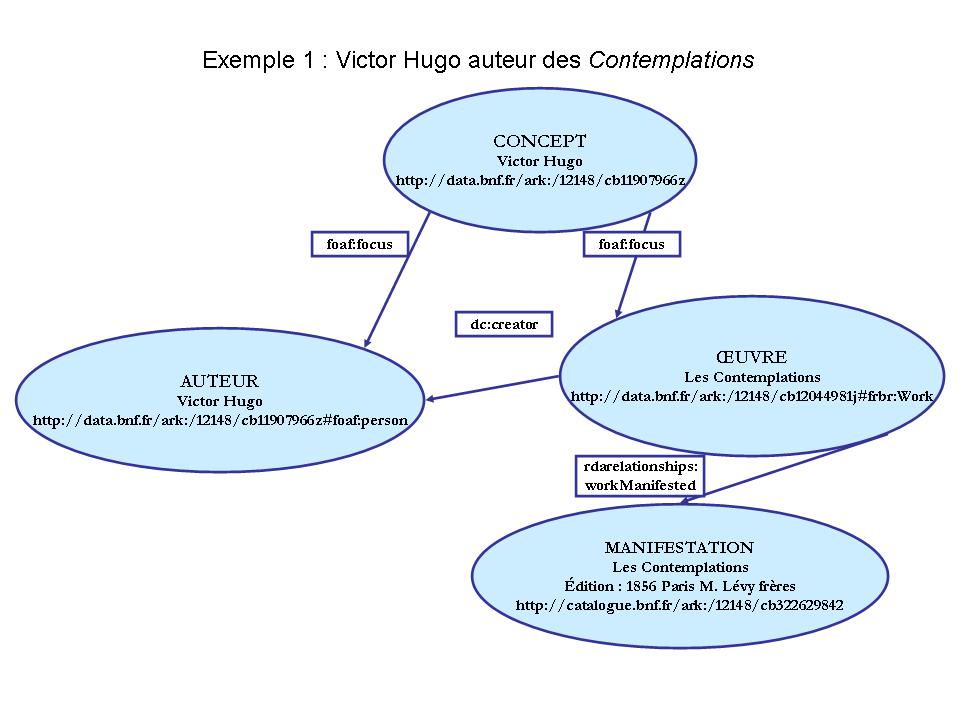
La structure des données RDF
Quelques ontologies et vocabulaires
- FOAF : friend of a friend
- Dublin Core
- Schema
- Skos
- Un index des ontologies : Linked Open Vocabularies